Ever seen someone type “that really irks me” and wondered exactly what it means in modern text conversations? You are not alone. The word irk meaning in text has spiked across social media platforms, Reddit threads, and everyday messaging apps leaving many users puzzled about its tone and intent.
Simply put, irk means to irritate, annoy, or mildly frustrate someone. But in the digital age, its usage has taken on fresh layers of expression, humor, and relatability.
From TikTok captions to Twitter rants, understanding what does irk mean in texting helps you communicate more clearly and decode what others are really feeling.
Whether you stumbled across it in a comment section or a group chat, this complete guide breaks down the real meaning, origin, examples, and social media use of irk so you never misread the vibe again.
What Does Irk Mean in Text?
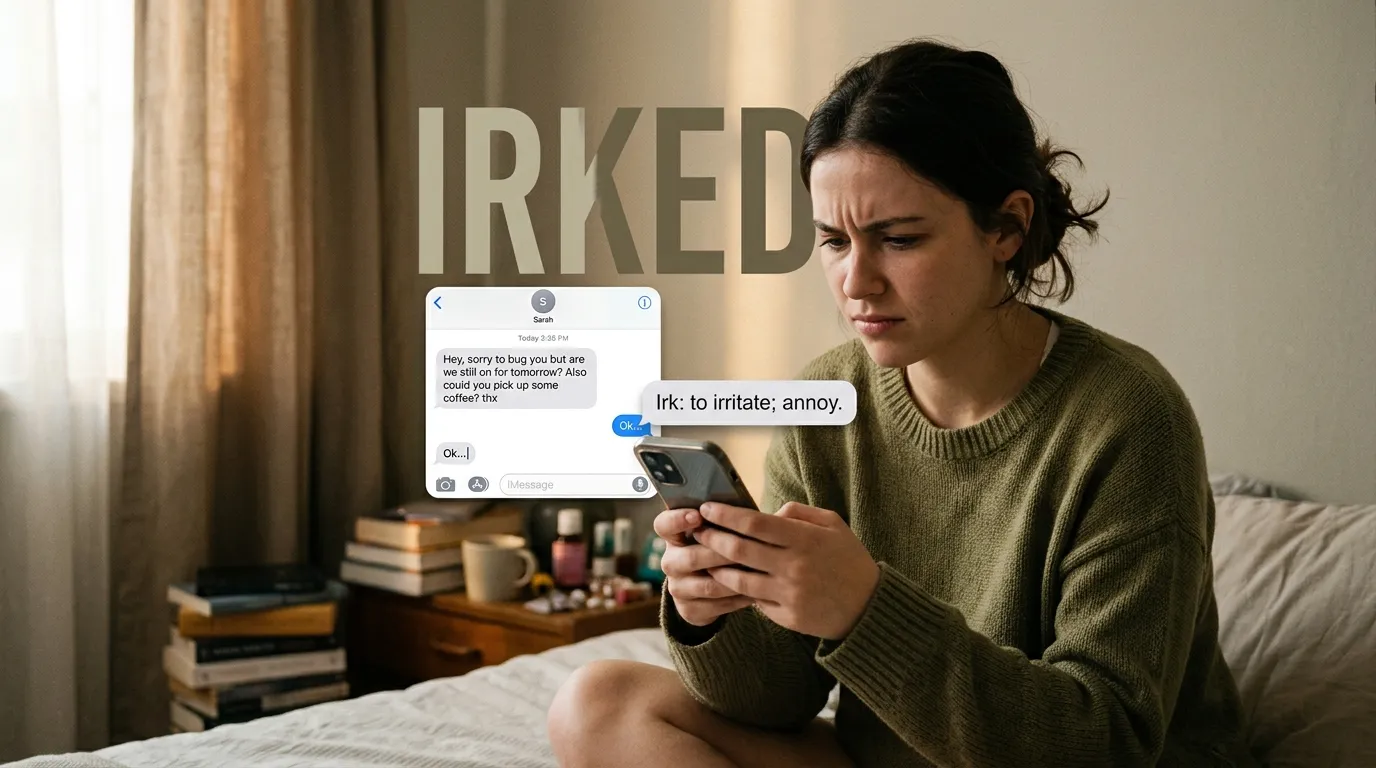
The word irk simply means to annoy, irritate, or bother someone. It describes a feeling of mild frustration rather than serious anger.
Unlike many internet expressions, irk is not an acronym or abbreviation. It is a real English word that has existed for centuries. Social media has simply made it more common in everyday texting.
When someone says something “irks” them, they are saying that it gets under their skin or makes them feel slightly annoyed.
Simple Definition
Irk = To annoy, bother, or mildly frustrate someone.
It usually refers to small everyday situations rather than major problems.
For example:
- Loud chewing really irks me.
- It irks him when people arrive late.
- The constant notifications are starting to irk everyone.
In texting, the meaning stays exactly the same.
Someone might write:
“That comment honestly irked me.”
This simply means the comment bothered or annoyed them.
Is Irk Slang?
Not exactly.
Many people assume irk is modern slang because they see it on TikTok, Instagram, or Snapchat. In reality, it is a standard English verb that has become trendy through internet culture.
Unlike terms such as LOL, BRB, or IDK, irk is neither an acronym nor an abbreviation. It has always been part of the English language, but younger generations now use it more frequently in casual conversations.
Today, you’ll often find phrases like:
- That irks me.
- You’re irking me.
- Why is this so irksome?
- This seriously irked everyone.
Because of its growing popularity online, many people mistake it for internet slang.
What Does It Mean in Everyday Chat?
In everyday conversations, Kirk usually describes small annoyances rather than serious conflicts.
Imagine these situations:
- Someone keeps interrupting you while you’re speaking.
- A friend constantly replies hours later.
- Your phone keeps freezing while you’re trying to send a message.
- Someone leaves dirty dishes in the sink every day.
Instead of saying,
“That really annoys me,”
many people simply say,
“That really irks me.”
The tone is usually casual and conversational.
In most cases, people use irk to express irritation without sounding overly emotional.
Where People Use Irk
As online conversations continue to evolve, irk appears across many social media platforms and messaging apps. While the meaning stays the same, the context often changes depending on where it’s used.
Irk on TikTok
TikTok creators often use irk when talking about everyday pet peeves, unpopular opinions, or relatable situations.
For example:
- “One thing that always irks me…”
- “Does this irk anyone else?”
- “Biggest dating irks.”
These videos usually invite viewers to share similar experiences in the comments.
Because TikTok encourages short, engaging content, the word fits naturally into quick storytelling and humorous videos.
Irk on Snapchat
On Snapchat, people mainly use irk during private conversations with friends.
Examples include:
- “You kinda irked me yesterday.”
- “That snap really irked me.”
- “Stop trying to irk me 😂”
The word often appears in playful conversations where friends tease each other without creating serious arguments.
Irk on Instagram
Instagram users frequently include irk in captions, Stories, and comments.
Examples:
- “Nothing irks me more than fake kindness.”
- “Pet peeve of the day.”
- “People who don’t reply for days really irk me.”
Lifestyle creators, influencers, and meme pages also use the word when discussing everyday frustrations that many followers can relate to.
Irk on WhatsApp
WhatsApp conversations tend to be more personal, so irk often appears when discussing family, work, or daily life.
Someone might say:
- “The traffic really irked me today.”
- “Don’t let little things irk you.”
Because WhatsApp is commonly used among family members and close friends, the tone is usually relaxed and genuine.
Irk in SMS Text Messages
Traditional text messaging still uses the word in exactly the same way.
For example:
- “Sorry if I irked you.”
- “I’m not trying to irk anyone.”
- “That situation really irked me.”
Even though many conversations now happen on social media, SMS users continue to use irk as a simple alternative to “annoy.”
Why Has Irk Become Popular Online?
The internet has changed the way people communicate. Short, expressive words often become popular because they quickly explain emotions without needing long explanations.
Irk is a perfect example.
Instead of saying:
“That situation mildly irritated me.”
People simply write:
“That irked me.”
The message is shorter, clearer, and sounds more conversational.
Another reason for its popularity is that it feels less aggressive than words like “hate” or “furious.” It allows people to express frustration without making the situation seem overly dramatic.
Social media also encourages users to share everyday experiences. Posts about annoying habits, customer service, slow internet, or common pet peeves often receive thousands of comments from people who can relate. As a result, irk has become a familiar part of online conversations.
Common Situations Where People Say “Irk”
You don’t need a major problem to use this word. Most people say irk when talking about small but irritating experiences.
Here are a few everyday examples:
- Someone chewing loudly during a movie.
- Friends who constantly cancel plans.
- Receiving unnecessary spam messages.
- Long waiting times in traffic.
- Slow internet during an important meeting.
- People talking loudly in quiet places.
- Forgetting your password repeatedly.
- Constant app notifications interrupting your work.
- Someone left a message on “read” without replying.
- Repeating the same mistake after being reminded several times.
These situations aren’t usually serious, but they can still be annoying enough for someone to say, “That really irks me.”
Different Ways People Use “Irk”
The word can appear in different forms depending on the sentence.
Irk
Used as the base verb.
Example:
“Small lies irk me.”
Irks
Used when talking about another person or thing.
Example:
“It irks her when people interrupt.”
Irked
Used in the past tense.
Example:
“His comment irked me yesterday.”
Irking
Used for ongoing situations.
Example:
“You’re really irking your sister.”
Irksome
An adjective describing something annoying.
Example:
“The constant noise became irksome.”
Learning these forms makes it easier to recognize the word wherever you see it online.
Real Chat Examples
Seeing a word used in real conversations is one of the easiest ways to understand it. Below are some realistic texting examples that show how people naturally use irk in everyday chats.
Example 1
A: Why do you look annoyed?
B: The meeting kept getting delayed.
A: Yeah, that would irk anyone.
Example 2
A: Did you watch the new episode?
B: I tried, but people kept posting spoilers.
A: That would irk me too.
Example 3
A: Why aren’t you replying in the group chat?
B: The constant notifications are starting to irk me.
A: Fair enough.
Example 4
A: You seem upset.
B: My internet keeps disconnecting every five minutes.
A: That has to be frustrating.
Example 5
A: Why did you leave the game early?
B: One player kept blaming everyone else. It really irked me.
A: I don’t blame you.
Example 6
A: You didn’t like the movie?
B: It wasn’t bad, but the ending really irked me.
A: I’ve heard other people say the same thing.
Example 7
A: What’s your biggest pet peeve?
B: People chewing loudly.
A: Same! That always irks me.
Example 8
A: Why did you mute the chat?
B: Too many unnecessary messages.
A: Sometimes that’s the best option.
Example 9
A: Are you okay?
B: Yeah, I’m just irked because my package is delayed again.
A: Hopefully it arrives soon.
Example 10
A: Why are you laughing?
B: My little brother keeps hiding my phone charger just to irk me.
A: That’s actually kind of funny.
How to Reply When Someone Says “Irk”
When someone says something irks them, your response depends on the situation and your relationship with that person. Sometimes a supportive reply works best, while other times a lighthearted response keeps the conversation fun.
Funny Replies
- “Sounds like it’s living rent-free in your head.”
- “Take a deep breath—you’ll survive!”
- “Welcome to adulthood!”
- “That’s today’s annoyance unlocked.”
Casual Replies
- “Yeah, I get that.”
- “Same here.”
- “That would bother me too.”
- “I understand why you feel that way.”
Friendly Replies
- “I’m sorry that happened.”
- “Hopefully tomorrow is better.”
- “Don’t let it ruin your day.”
- “I’d probably feel the same.”
Neutral Replies
- “I understand.”
- “That makes sense.”
- “Thanks for explaining.”
- “Everyone has different pet peeves.”
The best reply is one that matches the tone of the conversation. If someone is genuinely frustrated, empathy is usually more helpful than humor.
Is Irk Rude or Offensive?
The word irk is generally not considered rude or offensive.
Instead, it politely expresses mild annoyance or irritation. Most native English speakers view it as a softer alternative to saying someone is making them angry.
For example:
- “That noise really irks me.”
This sounds much less aggressive than:
- “That noise makes me furious.”
Because of this, the word is widely accepted in casual conversations.
Is It Safe to Use?
Yes.
You can safely use irk in:
- Text messages
- Social media posts
- Online comments
- Conversations with friends
- Family chats
Most people will understand that you’re describing a small annoyance rather than expressing serious anger.
Is It Appropriate at School or Work?
Generally, yes.
Because irk is a standard English word—not profanity or slang—it is appropriate in many professional and academic situations.
For example:
- “The repeated software errors are beginning to irk employees.”
or
- “One issue that often irks students is unclear instructions.”
The word sounds more professional than many informal expressions while still being easy to understand.
However, avoid overusing it in formal business writing. In reports or official emails, words like concern, issue, or frustrate may sometimes fit better depending on the context.
Who Uses This Term?
Although irk has existed for centuries, its popularity has grown significantly because of social media.
Today, people of many different age groups use it online.
Gen Z
Gen Z uses irk frequently on:
- TikTok
- Snapchat
- X (formerly Twitter)
It often appears in videos discussing:
- Pet peeves
- Dating habits
- School life
- Everyday frustrations
Millennials
Many Millennials also use the word, especially when discussing work, parenting, technology, or daily inconveniences.
Examples include:
- Slow Wi-Fi
- Traffic
- Customer service
- Office meetings
Older Adults
Older adults may not use irk as often in social media captions, but they regularly recognize it because it has long been part of the English language.
How Common Is It Online?
The word appears regularly across:
- TikTok videos
- Instagram captions
- Reddit discussions
- Facebook posts
- Gaming communities
- Online forums
- News comment sections
Its popularity has increased because people enjoy sharing relatable frustrations that others immediately understand.
Origin of the Term
Unlike many internet expressions, irk did not begin online.
It is an old English word that has been part of the language for hundreds of years. Historically, it has always meant to annoy, weary, or make someone feel irritated.
Over time, the word became less common in everyday speech. However, social media helped bring it back into popular use.
Today, creators, influencers, and everyday users include irk in posts because it sounds concise, expressive, and easy to understand.
Its recent popularity is largely influenced by:
- Internet memes
- Short-form videos
- Viral posts
- Relatable “pet peeve” content
- Everyday storytelling
Although the word itself is old, its modern popularity is very much connected to internet culture.
Comparison Table
| Term | Meaning | Type | Common Usage | Popularity |
| Irk | To annoy or bother someone | English word | Expressing mild frustration | High |
| IDK | I Don’t Know | Acronym | Casual texting and chats | Very High |
| IDC | I Don’t Care | Acronym | Informal conversations | High |
| IMO | In My Opinion | Acronym | Sharing personal opinions | High |
| BRB | Be Right Back | Acronym | Temporary conversation break | Very High |
This comparison shows that irk is different from terms like IDK or BRB because it is a real English word rather than an internet abbreviation.
Real-World Usage Example
Imagine you’re waiting in line at your favorite coffee shop before work. The customer ahead of you keeps changing their order, asking endless questions, and holding up the line.
You glance at your friend and text:
“People who can’t decide what they want always irk me.”
Your friend replies:
“I know! Especially when everyone else is waiting.”
This is a perfect example of how irk is naturally used to describe a small but relatable annoyance. It doesn’t suggest anger or hostility just mild frustration that many people can understand.
FAQs:
What does irk mean in text messages?
In text messages, irk means to annoy, bother, or mildly frustrate someone. People use it when talking about everyday situations that get on their nerves without expressing serious anger.
What does irk mean on TikTok?
On TikTok, irk usually appears in videos about pet peeves, relatable habits, funny annoyances, or everyday frustrations. Creators often ask questions like, “What instantly irks you?” to encourage viewers to share their opinions.
Is irk slang?
Not exactly. Irk is a standard English word, not an internet acronym or abbreviation. However, it has become more popular in recent years because of social media and online conversations, so many people mistakenly think it’s slang.
Is irk rude or offensive?
No. Irk is generally considered a polite way to describe mild annoyance. It is not offensive or inappropriate, and it can be used in casual conversations, social media posts, and even many school or workplace discussions.
How should you reply to irk?
A good reply depends on the conversation. If someone says something irks them, you can respond with understanding, such as:
- “I get what you mean.”
- “That would annoy me too.”
- “Hopefully it gets better.”
- “I understand why that bothered you.”
Showing empathy usually keeps the conversation friendly and respectful.
Final Thoughts:
If you’ve been wondering what irk means in text, the answer is simple: it means to annoy, bother, or mildly frustrate someone. Although the word has been part of the English language for centuries, it has gained fresh popularity through texting, TikTok, Snapchat, Instagram, WhatsApp, and other social media platforms.
Unlike internet abbreviations such as IDK or BRB, irk is a real English verb that naturally fits into both online and offline conversations. People use it to describe everyday annoyances without sounding overly dramatic or aggressive.
Understanding this word can make online conversations easier to follow and help you communicate more confidently. Whether you’re chatting with friends, commenting on social media, or reading posts online, you’ll now recognize that irk simply expresses mild irritation in a clear and relatable way.
As with any expression, consider your audience and the situation before using it. In casual conversations, it’s perfectly acceptable. In more formal settings, choosing alternatives like frustrate, concern, or annoy may sometimes be more appropriate.
Language continues to evolve through digital communication, and words like irk show how traditional English vocabulary can become popular again in modern internet culture. The more familiar you become with these expressions, the easier it is to understand online discussions and connect with people across different platforms.

Michael Anderson is a Bible researcher and Christian writer who simplifies Scripture for everyday readers. At meanspaces.com he shares clear and meaningful insights into Bible verses and their spiritual significance.