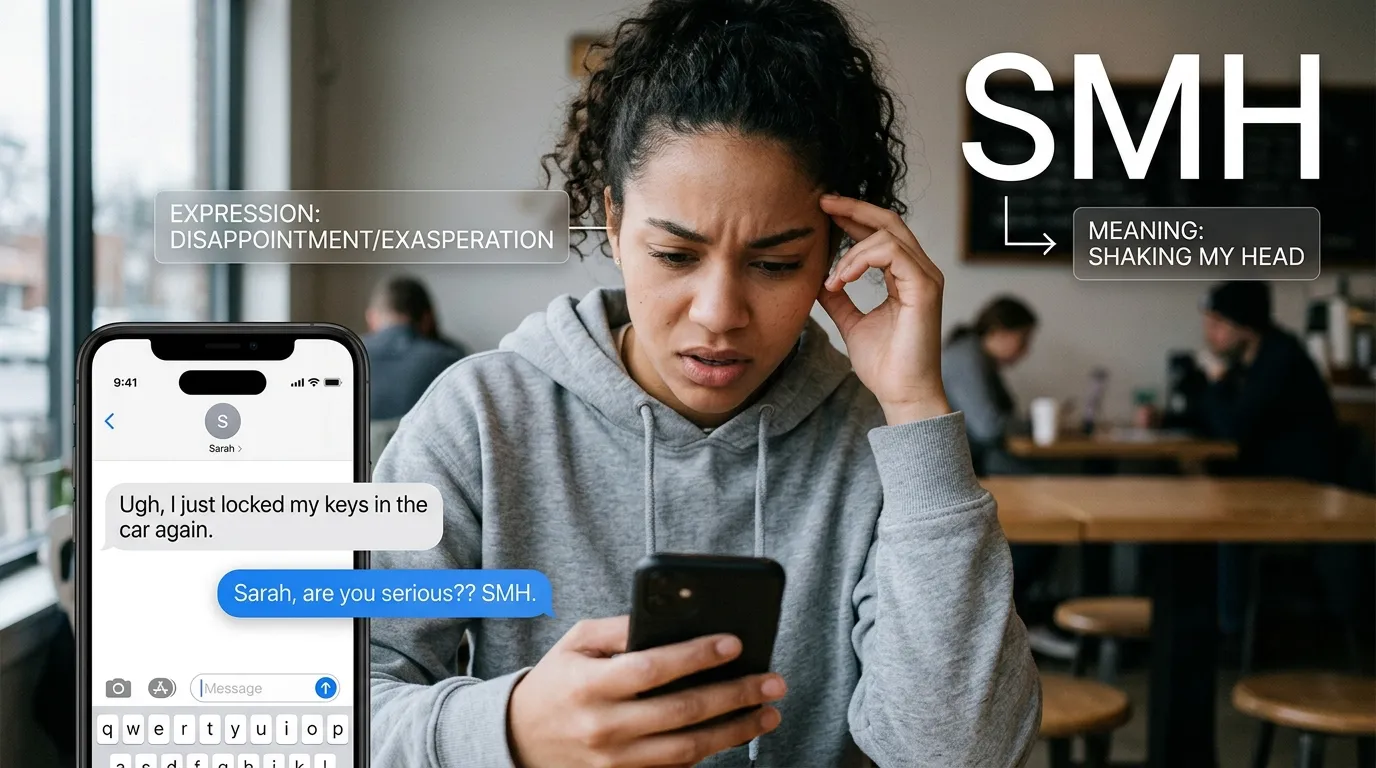
If you’ve ever received a message saying “SMH” and weren’t sure what it meant, you’re not alone. SMH stands for “shaking my head,” a popular internet acronym used to express disappointment, disbelief, frustration, or mild embarrassment. You’ll often see it in text messages, on TikTok, Snapchat, Instagram, WhatsApp, and other social media platforms.
People search for what SMH means in text messaging because the abbreviation appears everywhere online, yet its meaning isn’t always obvious to new users. Once you understand how it’s used, you’ll recognize it in everyday conversations and know exactly when to use it yourself.
Whether you’re chatting with friends, reading social media comments, or trying to understand internet slang, this guide explains everything about SMH in simple, easy-to-follow language.
What Does SMH Mean in Text Messaging?
SMH means “shaking my head.” It is an internet acronym people use to show disappointment, disbelief, frustration, or annoyance without typing a long explanation.
Imagine someone tells you they forgot their wallet for the third time this week. Instead of replying with, “I can’t believe you did that again,” you might simply reply:
SMH
The phrase represents the physical action of shaking your head when something seems surprising, silly, or disappointing.
Because text messages don’t include facial expressions or body language, abbreviations like SMH help people express emotions quickly. A single acronym can communicate an entire reaction that would otherwise take several sentences to explain.
Today, SMH has become one of the most recognized internet expressions and is used by millions of people every day across messaging apps and social media.
Is SMH Slang, an Acronym, or an Abbreviation?
Many people wonder whether SMH is slang or an abbreviation. The answer is a little of both.
Technically, SMH is an acronym because each letter represents the first letter of a word:
- S = Shaking
- M = My
- H = Head
At the same time, it’s widely considered internet slang because people use it informally in online conversations.
Unlike formal abbreviations used in business or education, SMH belongs to everyday digital communication. It helps people express emotions naturally without writing complete sentences.
What Does SMH Mean in Everyday Conversations?
The meaning of SMH depends on the situation, but it usually expresses one of these emotions:
- Disappointment
- Frustration
- Disbelief
- Surprise
- Embarrassment
- Mild annoyance
For example:
Friend: I accidentally locked my keys inside the car.
You: SMH 😂
Here, the reply isn’t meant to be rude. It playfully says, “I can’t believe that happened.”
Now consider another conversation:
Friend: I studied for weeks but still failed my exam.
You: SMH… I’m really sorry to hear that.
In this case, SMH shows sympathy and disappointment about the situation rather than criticism.
This is why context matters. The same acronym can express humor in one conversation and empathy in another.
Where People Use SMH
Although SMH started in online chat rooms years ago, it is now used across almost every major messaging platform. Its meaning stays the same, but the way people use it can vary depending on where the conversation happens.
SMH on TikTok
TikTok users frequently write SMH in video captions and comments when reacting to surprising, funny, or frustrating content.
For example, someone might upload a video showing a cooking disaster and caption it:
“Burned dinner again… SMH.”
Viewers also use SMH in comments when they can’t believe something they just watched.
Example:
“He actually thought that would work? SMH.”
Because TikTok conversations are short and fast-paced, acronyms like SMH help users react instantly.
SMH on Snapchat
Snapchat is built around quick conversations between friends, making short expressions extremely popular.
If a friend snaps:
“I missed my bus again.”
A common reply could be:
“SMH 😂”
Among close friends, SMH often has a playful tone. Instead of criticizing someone, it’s usually a lighthearted reaction to an everyday mistake.
SMH on Instagram
Instagram users commonly use SMH in comments, captions, Stories, and Reels.
For instance, someone might post:
“Forgot my anniversary… SMH.”
Followers immediately understand that the person is expressing regret or disappointment.
People also use SMH when reacting to trending news, celebrity posts, or humorous videos.
Example:
“People still believe that rumor? SMH.”
The acronym adds emotion while keeping comments short and engaging.
SMH on WhatsApp
WhatsApp conversations often feel like normal texting between family, friends, classmates, and coworkers.
You might see messages such as:
“The meeting was canceled five minutes before it started. SMH.”
Or:
“Left my laptop charger at home again. SMH.”
In these situations, SMH communicates frustration without sounding overly dramatic.
SMH in SMS Text Messages
Even though messaging apps have become more popular, traditional SMS texting still uses internet acronyms like SMH every day.
Imagine this conversation:
Mom: Did you remember your dentist appointment?
Son: I completely forgot… SMH.
The acronym quickly shows disappointment without needing a long explanation.
Its simplicity is one reason SMH has remained popular for many years.
Real Chat Examples
One of the easiest ways to understand SMH is to see how people use it in everyday conversations. Here are ten realistic texting examples.
Example 1
A: I left my homework at home again.
B: SMH 😂
A: I really need to get organized.
Example 2
A: I forgot it was my sister’s birthday.
B: SMH… You’re in trouble now.
A: I know!
Example 3
A: My phone died during the concert.
B: SMH. That’s the worst timing.
A: I missed all the videos.
Example 4
A: I wore mismatched shoes to work.
B: SMH 😂
A: Nobody told me until lunch.
Example 5
A: I stayed up until 3 a.m. watching videos.
B: SMH. Now you’re tired, aren’t you?
A: Definitely.
Example 6
A: I accidentally deleted all my photos.
B: SMH… That hurts.
A: Thankfully, I had a backup.
Example 7
A: I studied the wrong chapter for today’s quiz.
B: SMH. That’s so frustrating.
A: I couldn’t believe it.
Example 8
A: They canceled our vacation because of the weather.
B: SMH. Hopefully you can reschedule soon.
A: I hope so.
Example 9
A: I spilled coffee on my keyboard.
B: SMH 😂
A: At least it still works.
Example 10
A: I forgot my own password again.
B: SMH.
A: I seriously need a password manager.
How to Reply When Someone Says “SMH”
Seeing SMH in a message doesn’t always require the same response. The best reply depends on whether the other person is joking, venting, or expressing disappointment.
Funny Replies
If the conversation is lighthearted, you can keep things playful.
- You caught me. 😂
- Guilty as charged.
- I deserved that one.
- Fair enough!
- Don’t remind me.
Casual Replies
For everyday conversations, these responses work well.
- I know, right?
- Seriously.
- Exactly.
- That’s true.
- It happens.
Friendly Replies
If someone is upset, a supportive response is usually the best choice.
- I’m sorry that happened.
- Hopefully tomorrow is better.
- Don’t worry it happens to everyone.
- You’ll bounce back.
- I’m here if you need anything.
Neutral Replies
Sometimes a simple acknowledgment is enough.
- I understand.
- I see what you mean.
- That’s unfortunate.
- Thanks for telling me.
- Hopefully everything works out.
Responding with empathy instead of sarcasm helps keep conversations positive, especially when someone is sharing disappointing news.
Is SMH Rude or Offensive?
In most situations, SMH is not considered rude or offensive. It’s simply a quick way to express disbelief or disappointment.
However, tone and context matter.
If someone tells you about a serious problem and you respond with only “SMH,” it may sound dismissive or unsympathetic.
For example:
Friend: I failed my driving test today.
Reply: SMH.
While this isn’t offensive, it can feel cold because it doesn’t acknowledge the person’s feelings.
A kinder response would be:
“SMH… I’m sorry that happened. You’ll do better next time.”
SMH is generally appropriate in casual conversations with friends, family members, or classmates. However, it’s usually best to avoid internet slang in professional emails, business messages, academic writing, or formal communication.
As a general rule, if you wouldn’t use emojis in the conversation, it’s probably better not to use SMH either.
Who Uses This Term?
SMH has become one of the most recognizable internet abbreviations, and people of all ages use it. However, it’s especially common among younger users who spend time on social media and messaging apps.
Gen Z and Teenagers
Gen Z uses SMH regularly because it’s quick, expressive, and easy to understand. Instead of typing a full sentence, they can communicate disappointment or disbelief with just three letters.
You’ll often find SMH in:
- Group chats
- TikTok comments
- Snapchat conversations
- Instagram DMs
- Gaming communities
For many teenagers, using internet slang like SMH is simply part of everyday communication.
Millennials
Millennials also use SMH frequently, especially those who grew up during the rise of social media and online forums.
Many millennials first encountered SMH on platforms like Twitter, Facebook, or internet message boards. Today, they still use it in casual texting and social media conversations.
Adults
Adults who text regularly or use social media often recognize SMH, even if they don’t use it every day.
Parents sometimes learn the abbreviation from their children, while professionals may see it in informal workplace chats or personal messages.
Where Does It Appear Most Often?
SMH commonly appears on:
- TikTok
- Snapchat
- Facebook Messenger
- X (formerly Twitter)
- Discord
- SMS text messages
Because it’s short and easy to type, SMH continues to be one of the most popular internet acronyms used around the world.
Origin of the Term
Like many internet abbreviations, SMH developed naturally as online communication became faster and more informal.
Early Internet Culture
The phrase “shaking my head” existed long before smartphones and social media. People often used it in everyday speech to describe their reaction to something disappointing or unbelievable.
As internet chat rooms, instant messaging services, and online forums became more popular, users started shortening common phrases to save time.
That’s how SMH became widely recognized.
The Rise of Social Media
During the late 2000s and early 2010s, social media platforms helped SMH spread to millions of users.
As Twitter encouraged shorter posts and texting became the primary way people communicated, abbreviations like SMH became even more practical.
Soon, the acronym appeared across Facebook posts, YouTube comments, memes, and messaging apps.
Is the Exact Origin Known?
There isn’t one confirmed person who invented SMH.
Like many internet slang terms, it evolved naturally through online communities and became popular because people found it useful.
Today, SMH is understood by internet users across many countries, making it one of the most recognizable digital expressions.
Comparison Table
Many internet abbreviations appear together in online conversations. Here’s how SMH compares with other common texting acronyms.
| Term | Meaning | Type | Common Usage | Popularity |
| SMH | Shaking My Head | Acronym | Disappointment, disbelief, frustration | Very High |
| IDK | I Don’t Know | Acronym | Expressing uncertainty | Very High |
| IDC | I Don’t Care | Acronym | Showing indifference | High |
| IMO | In My Opinion | Acronym | Sharing personal opinions | High |
| BRB | Be Right Back | Acronym | Leaving a conversation briefly | High |
Although all of these abbreviations save time while texting, each one communicates a different emotion or purpose.
SMH focuses on expressing a reaction, while the others provide information about opinions, availability, or uncertainty.
Real-World Usage Example
Imagine you’re chatting with a friend after work.
Friend: I drove all the way to the store and realized I left my wallet at home.
You reply:
SMH 😂
Your friend responds:
I know… now I have to drive back.
In this conversation, SMH isn’t meant to insult anyone. Instead, it’s a lighthearted way of saying, “I can’t believe that happened.”
Now consider another example.
A coworker messages:
“Our meeting was canceled after everyone had already arrived.”
A response like:
“SMH. That’s really frustrating.”
shows empathy while also expressing disappointment about the situation.
These examples show why context matters. The same acronym can sound humorous, sympathetic, or mildly critical depending on the conversation.
FAQs:
What does SMH mean in text messages?
SMH stands for “shaking my head.” People use it to express disappointment, disbelief, frustration, or mild embarrassment in text conversations.
What does SMH mean on TikTok?
On TikTok, SMH is commonly used in comments and captions to react to funny, surprising, or frustrating videos. It usually means the creator or viewer can’t believe what happened.
Is SMH slang?
Yes. SMH is considered internet slang and is also an acronym. It’s widely used in casual online conversations and text messaging.
Is SMH rude or offensive?
No. SMH is generally not rude or offensive. However, using it without context may sound dismissive if someone is talking about a serious or emotional situation.
How should you reply to SMH?
Your reply depends on the conversation. You can respond with humor if the situation is lighthearted or with empathy if someone is sharing disappointing news.
Conclusion:
Now that you know what SMH means in text messaging, it’s easy to understand why this simple acronym has remained popular for so many years.
Whether you see it on TikTok, Snapchat, Instagram, WhatsApp, or in a regular text message, SMH is simply a quick way to express disappointment, disbelief, frustration, or mild embarrassment. It’s a natural part of modern digital communication and helps people share emotions without typing long sentences.
Like any internet slang, the key is using it in the right context. Among friends and family, SMH often adds humor or personality to a conversation. In more serious situations, pairing it with a thoughtful response shows empathy and keeps the conversation respectful.
As online language continues to evolve, abbreviations like SMH remain useful because they’re short, familiar, and instantly understood by millions of people around the world. Learning these common expressions can make texting, social media, and online conversations feel much more natural and enjoyable.

Sarah Thompson is a passionate Bible researcher and Christian content writer at meanspaces.com dedicated to helping readers discover the deeper meaning of Scripture through clear and insightful explanations.