If you’ve ever received a text saying WDYLL and had no idea what it meant, you’re not alone. This popular internet slang term has taken over text conversations, Instagram DMs, Snapchat, and TikTok comments yet many people still search for its exact meaning daily.
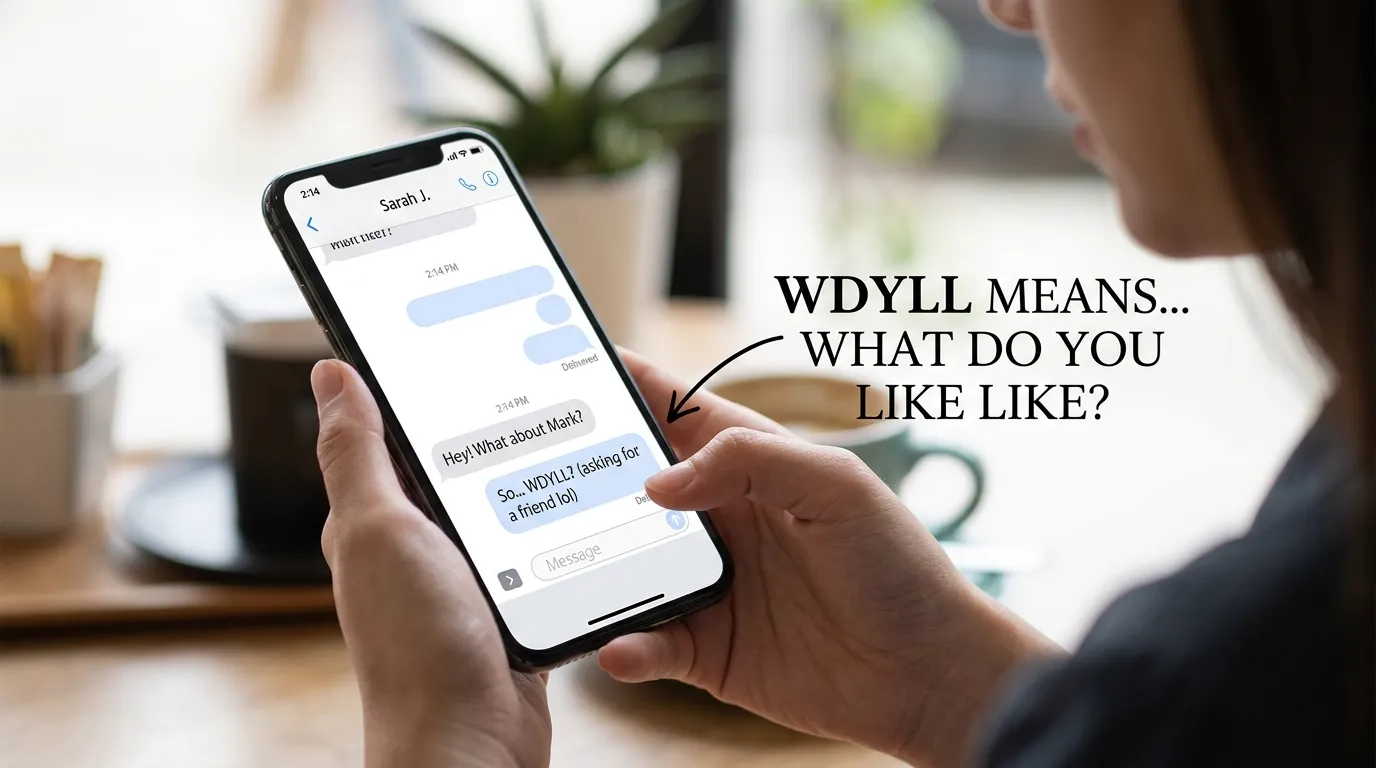
WDYLL stands for “What Do You Look Like?” a casual, curiosity-driven question used when two people are getting to know each other online or before meeting in person. Unlike older slang that faded quickly, WDYLL has maintained strong traction across Gen Z and millennial digital communication.
Whether you’re navigating a new online friendship, a flirty conversation, or simply trying to decode someone’s message, understanding WDYLL gives you a real edge in modern digital conversations. In this guide, we break down the full meaning, real-life usage examples, and how WDYLL is used across today’s biggest social media platforms.
WDYLL Meaning in Text
WDYLL most commonly means “What Do You Look Like?” It is a texting abbreviation people use when they want someone to describe their appearance or share what they look like.
Instead of typing the full question, people shorten it to WDYLL to save time while chatting. This is common in fast-moving conversations where users prefer quick and simple messages.
Unlike some internet slang that has several different meanings, WDYLL is generally understood as asking about a person’s physical appearance.
Is WDYLL Slang, an Acronym, or an Abbreviation?
WDYLL is an acronym created from the first letter of each word in the phrase:
- W = What
- D = Do
- Y = You
- L = Look
- L = Like
Because it’s widely used in casual online conversations, many people also refer to it as internet slang. However, technically, it is a texting acronym.
What Does WDYLL Mean in Everyday Chat?
People often use WDYLL when talking to someone they have never met in person. For example, if two people become friends through gaming, social media, or a group chat, one of them might ask WDYLL out of curiosity.
Here are a few common situations where someone might use it:
- Meeting someone through an online game.
- Chatting with a new friend on Snapchat.
- Talking in a dating app conversation.
- Getting to know someone in a group chat.
- Continuing a conversation after exchanging messages for a while.
The question is usually meant to learn more about the other person, but context always matters. If someone asks WDYLL too early or makes you uncomfortable, you are never obligated to answer or share personal photos.
Where People Use WDYLL
WDYLL appears across many online platforms where people have casual conversations. While it isn’t as common as abbreviations like LOL or BRB, you may still come across it when chatting with new people.
WDYLL on TikTok
On TikTok, WDYLL sometimes appears in comments or direct messages when users are curious about another creator or follower. It may also appear in videos discussing texting abbreviations or internet slang.
Most TikTok users prefer using short acronyms because they make conversations faster and easier.
WDYLL on Snapchat
Snapchat is one of the most common places where WDYLL is used.
Since many Snapchat users connect with new friends online, someone may ask WDYLL before continuing the conversation. In some cases, they’re simply trying to match a face with the person they’re chatting with.
As always, you should only share photos or personal information if you feel comfortable and trust the person.
WDYLL on Instagram
On Instagram, WDYLL may appear in direct messages between new followers or online friends. Sometimes people ask after chatting for a while because they want to know more about the person behind the profile.
However, many Instagram users already have profile pictures, so the abbreviation is less common than on Snapchat.
WDYLL on WhatsApp
People usually use WDYLL on WhatsApp when talking with someone they haven’t met in person. It might come up during friendly conversations, online communities, or after being introduced through mutual friends.
Since WhatsApp often connects people internationally, users sometimes ask WDYLL before making a voice or video call.
WDYLL in SMS Text Messages
Although internet slang is more common on social media, WDYLL also appears in regular text messages.
For example, someone who recently exchanged phone numbers might send:
“We’ve been texting for days… WDYLL?”
This is simply a shorter way of asking, “What do you look like?”
Real Chat Examples
Seeing WDYLL used in realistic conversations makes it much easier to understand.
Example 1
A: We’ve been chatting for almost a week now.
B: I know! It feels like we’ve known each other longer.
A: WDYLL? I don’t think I’ve ever seen a picture of you.
Example 2
A: You seem really funny.
B: Thanks 😂
A: WDYLL though? I’m curious.
Example 3
A: Are you going to the concert next month?
B: Yes!
A: Nice! WDYLL? It’ll help me recognize you.
Example 4
A: I finally downloaded Snapchat.
B: Awesome!
A: WDYLL? Your Bitmoji doesn’t really help.
Example 5
A: We’ve played together for months.
B: That’s true.
A: WDYLL? I’ve always wondered.
These examples show that WDYLL is usually asked out of curiosity rather than as an insult or joke. Still, everyone has different comfort levels when sharing personal information online. If you don’t want to answer, it’s perfectly okay to politely decline or change the subject.
More Real Chat Examples
Example 6
A: You always have great stories.
B: Thanks! 😄
A: WDYLL? I can’t picture you.
Example 7
A: I think we should start a video call sometime.
B: Sure, maybe this weekend.
A: Before that… WDYLL?
Example 8
A: We joined the same study group.
B: Yeah, it’s been helpful.
A: WDYLL? We might have already seen each other on campus.
Example 9
A: You’re really good at this game.
B: Appreciate it!
A: WDYLL? I’ve never actually seen you.
Example 10
A: It’s nice talking to you every day.
B: I feel the same.
A: WDYLL? Just curious.
How to Reply When Someone Says “WDYLL”
When someone asks WDYLL, they’re usually asking what you look like. Your reply depends on how comfortable you feel and how well you know the person. There is no single correct answer, and you should never feel pressured to share personal information.
Funny Replies
If you want to keep the conversation light, you can respond with humor.
Examples:
- “Like someone who needs more sleep. 😅”
- “Imagine a superhero without the cape.”
- “Mostly powered by coffee.”
- “A solid 8/10 on good hair days.”
- “You’ll have to use your imagination!”
Casual Replies
These work well when you’re chatting with someone you know reasonably well.
Examples:
- “I’m tall with black hair and glasses.”
- “Nothing special—just an ordinary person.”
- “I have short brown hair and usually wear hoodies.”
- “I can send a picture later if you’d like.”
- “Check my profile picture.”
Friendly Replies
These responses are warm without sharing more than you’re comfortable with.
Examples:
- “I’m happy to describe myself.”
- “Sure! I’m about 5’9″ with dark hair.”
- “You’ll probably recognize me from my profile.”
- “Maybe we’ll do a video call sometime.”
- “I’ll send a recent photo when I get a chance.”
Neutral Replies
If you prefer to stay private, these are polite ways to respond.
Examples:
- “I’d rather not share photos yet.”
- “Maybe after we know each other better.”
- “I’m more comfortable keeping things private.”
- “Let’s keep chatting first.”
- “I’d rather focus on getting to know each other.”
Remember, your privacy matters. Sharing personal information should always be your choice.
Is WDYLL Rude or Offensive?
In most situations, WDYLL is not considered rude or offensive. It’s simply a shortened way of asking, “What do you look like?”
Whether it feels appropriate depends on the situation, the relationship between the people chatting, and the tone of the conversation.
For example, if two friends have been talking online for several weeks, asking WDYLL may feel natural.
However, if someone you’ve just met immediately asks WDYLL, you might find the question too personal. Everyone has different comfort levels, and that’s perfectly okay.
Is It Safe to Use?
Yes, WDYLL is generally safe to use in casual conversations.
Still, remember these simple guidelines:
- Respect the other person’s privacy.
- Don’t pressure anyone to send photos.
- Accept “no” as an answer.
- Be polite and respectful.
Healthy online conversations are built on trust and mutual respect.
Is WDYLL Appropriate at School or Work?
Usually, no.
WDYLL is informal internet slang, making it better suited for conversations between friends or social media chats.
In school or workplace communication, it’s usually better to use complete sentences and maintain a professional tone.
For example, instead of saying WDYLL, you might simply introduce yourself naturally or wait until you know the person better.
Who Uses This Term?
Although WDYLL isn’t one of the most common texting abbreviations, it still appears across various online communities.
Gen Z and Younger Users
Gen Z users are the most likely to understand WDYLL immediately.
Growing up with texting, gaming, and social media has made internet acronyms part of everyday communication.
Teenagers and Young Adults
High school students, college students, and young adults often use abbreviations to make conversations quicker.
Instead of typing an entire sentence, they prefer short forms like:
- LOL
- BRB
- IDK
- IMO
- WDYLL
Online Gaming Communities
Gamers sometimes use WDYLL after playing together for a while.
Once teammates become friends, it’s common for conversations to move beyond the game.
Social Media Users
WDYLL occasionally appears on:
- Snapchat
- TikTok
- Discord
- Messenger
Although it’s not as common as popular slang like “FR” or “TBH,” many internet users still recognize it.
How Popular Is WDYLL?
Compared with abbreviations like LOL or OMG, WDYLL is relatively uncommon.
Most people encounter it when chatting with someone they’ve recently met online rather than seeing it in public posts.
Origin of the Term
Like many internet abbreviations, WDYLL developed as people looked for faster ways to communicate online.
Instead of repeatedly typing “What Do You Look Like?”, users shortened the phrase to its first letters.
The exact origin isn’t clearly documented, but it likely emerged during the early growth of online messaging, chat rooms, and instant messaging platforms.
As texting became more popular, abbreviations helped users save time and type more quickly, especially on older mobile phones with small keyboards.
Today, WDYLL continues to appear occasionally in social media conversations, messaging apps, and gaming communities, although it’s less common than many newer slang terms.
Comparison Table
| Term | Meaning | Type | Usage | Popularity |
| WDYLL | What Do You Look Like? | Acronym | Asking about someone’s appearance | Medium |
| IDK | I Don’t Know | Acronym | Expressing uncertainty | Very High |
| IDC | I Don’t Care | Acronym | Showing indifference | High |
| IMO | In My Opinion | Acronym | Sharing an opinion | High |
| BRB | Be Right Back | Acronym | Leaving a conversation briefly | Very High |
This comparison shows that while WDYLL is less common than classic texting abbreviations, it’s still useful in conversations where people are getting to know one another online.
Real-World Usage Example
Imagine you’ve joined an online photography group and become friends with someone who regularly comments on your posts. After chatting for several days about cameras, travel, and hobbies, they send a message saying:
“We’ve talked a lot, but WDYLL?”
In this situation, they’re simply asking what you look like because they’ve never met you in person.
You could describe yourself, share a profile picture if you’re comfortable, or politely say you’d rather wait until you know each other better. There is no obligation to share personal information, and a respectful conversation should always honor your privacy.
FAQs:
What does WDYLL mean in text messages?
WDYLL usually stands for “What Do You Look Like?” It is a texting acronym people use when they want to know another person’s appearance during an online conversation.
What does WDYLL mean on TikTok?
On TikTok, WDYLL has the same meaning: “What Do You Look Like?” It may appear in direct messages or comments when users are getting to know each other.
Is WDYLL slang?
Yes. WDYLL is considered internet slang because it is commonly used in casual online conversations. Technically, it is also a texting acronym made from the first letter of each word in the phrase.
Is WDYLL rude or offensive?
No. WDYLL is generally not rude or offensive. However, because it asks about someone’s appearance, it can feel personal. Always respect the other person’s privacy, and don’t pressure them to answer or send photos.
How should you reply to WDYLL?
Reply in a way that matches your comfort level. You can:
- Describe yourself briefly.
- Share a profile picture if you’re comfortable.
- Politely decline if you prefer to keep your appearance private.
- Suggest getting to know each other better first.
There is no right or wrong response—your privacy and comfort should always come first.
Conclusion:
If you’ve been wondering what does WDYLL mean in text, the answer is simple: it usually stands for “What Do You Look Like?” People use it in texting, Snapchat, TikTok, Instagram, WhatsApp, and other messaging platforms when they’re curious about someone’s appearance.
Although WDYLL is a friendly and informal acronym, it’s best used in casual conversations with people you know or trust. Because it asks a personal question, it’s important to respect boundaries and remember that no one is required to share photos or personal details online.
As with many internet abbreviations, understanding the context makes all the difference. Knowing what WDYLL means can help you reply confidently, avoid confusion, and communicate more naturally across today’s most popular social media platforms.
Whether you’re chatting with a new online friend, joining a gaming community, or simply trying to understand the latest texting slang, learning terms like WDYLL makes digital conversations easier to follow. The internet is constantly introducing new acronyms, but once you understand their meanings, staying connected becomes much simpler.

Sarah Thompson is a passionate Bible researcher and Christian content writer at meanspaces.com dedicated to helping readers discover the deeper meaning of Scripture through clear and insightful explanations.