If you’ve ever seen someone post “LMS” and had no idea what it meant, you’re not alone. This short, powerful abbreviation has taken over text messages, Instagram captions, Snapchat streaks, and TikTok comment sections yet its meaning often goes unexplained.
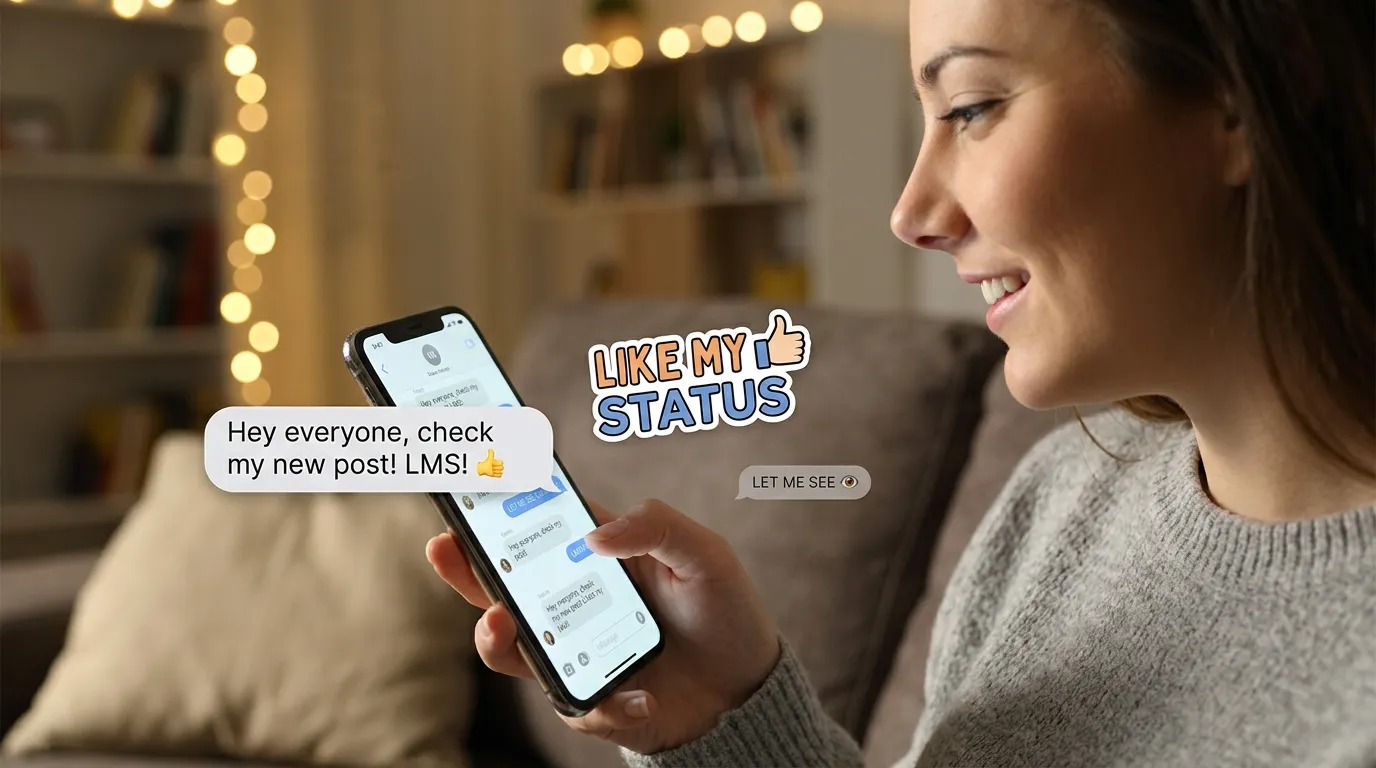
So, what does LMS mean in text? At its core, LMS stands for “Like My Status” a call-to-action originating from Facebook that has since evolved into a versatile piece of internet slang used across every major platform. Depending on the context, it can carry different meanings, tones, and even humorous connotations.
In this guide, you’ll discover the real meaning of LMS, explore real-world examples from everyday conversations, and understand exactly how it’s used across social media in 2026. Whether you’re a curious parent, a social media newbie, or simply want to stay ahead of the latest digital language trends — this is your complete, no-fluff breakdown.
LMS Meaning in Text
The most common meaning of LMS in texting and on social media is “Like My Status.” It’s an internet abbreviation that asks friends or followers to like a post, photo, story, or status update.
For example, someone might post:
“LMS if you’re excited for summer!”
In this case, they’re inviting people to like the post if they agree with the statement.
Is LMS Slang, an Acronym, or an Abbreviation?
LMS is an acronym because each letter represents the first letter of a word:
- L = Like
- M = My
- S = Status
Over time, it has also become part of everyday internet slang, especially among teenagers and young adults who communicate through social media.
Like many online abbreviations, LMS helps people type faster while encouraging engagement with their content.
What Does LMS Mean in Everyday Chat?
Although it began on social media, people now use LMS in casual conversations as well.
For example:
Friend 1: LMS on my latest picture!
Friend 2: Done! It looks great.
In another conversation:
Alex: LMS if you think we should watch a movie tonight.
Jordan: Liked! Definitely.
The phrase isn’t meant to sound demanding. Most people use it as a fun way to invite interaction from friends.
Can LMS Have Other Meanings?
Yes. Depending on the situation, LMS can also represent different phrases outside of social media, including:
- Learning Management System (education)
- Laboratory Management System (science)
- Library Management System (schools)
However, when you’re chatting with friends or browsing social media, “Like My Status” is almost always the intended meaning.
That’s why understanding the conversation and platform is important before assuming which definition someone means.
Where People Use LMS
The meaning of LMS stays mostly the same across different platforms, but people use it in slightly different ways depending on where they’re posting.
LMS on TikTok
TikTok creators sometimes use LMS in captions or comments to encourage engagement.
Examples include:
- LMS if you agree.
- LMS for Part 2.
- LMS if this made you laugh.
Instead of simply asking viewers to watch a video, creators use LMS to increase likes and reach more people.
LMS on Snapchat
On Snapchat, LMS often appears in private stories or public stories.
Someone might post:
LMS and I’ll send you a snap.
Or:
LMS if you’re awake!
Friends use it as a quick way to start conversations or see who’s active.
LMS on Instagram
Instagram users commonly include LMS in captions, stories, and notes.
Examples:
- LMS for a follow back.
- LMS if you love this outfit.
- LMS and tell me your favorite song.
Influencers, creators, and regular users all use LMS to increase engagement and interact with followers.
LMS on WhatsApp
Although less common than on Instagram or TikTok, LMS still appears in WhatsApp chats and status updates.
Someone may write:
LMS if you’re coming tonight.
Friends simply tap the status or reply to show they’re interested.
LMS in SMS (Text Messages)
People occasionally use LMS in regular text messages, especially among younger users familiar with internet slang.
Example:
Emma: I posted new vacation photos. LMS when you get a chance!
Ryan: Sure! I’ll check them out now.
In texting, LMS feels casual and friendly rather than formal.
Why Is LMS So Popular?
There are several reasons why LMS has remained popular for years.
It’s Short and Easy
Typing three letters is much faster than writing “Like my status.”
It Encourages Interaction
People enjoy receiving likes, comments, and reactions from friends. LMS is a simple invitation to engage.
It Works Across Multiple Platforms
Unlike some slang that belongs to one app, LMS is understood on Facebook, Instagram, Snapchat, WhatsApp, and other social media platforms.
It Creates Conversations
Many LMS posts lead to comments, replies, and direct messages, making social media more interactive.
Real Chat Examples
Here are realistic examples showing how LMS appears in everyday conversations.
Example 1
A: Just uploaded my graduation photos.
B: Nice! LMS?
A: Yes! Let me know which one you like best.
Example 2
A: LMS if you’re coming to the party tonight.
B: I just liked it.
A: Great! See you there.
Example 3
A: I finally got my driver’s license!
B: Congrats!
A: LMS on my Facebook post when you have a minute.
Example 4
A: New profile picture!
B: It looks amazing.
A: Thanks! Don’t forget to LMS.
Example 5
A: LMS if you think pizza is better than burgers.
B: Easy choice—I liked it!
A: I knew you’d agree.
Why Context Matters
Although “Like My Status” is the meaning most people expect, context always matters. If you see LMS in a classroom, workplace, or technical discussion, it could refer to a Learning Management System rather than social media.
Ask yourself these questions:
- Is this conversation about social media?
- Are people discussing school or online learning?
- Is someone asking for engagement on a post?
The answers will usually make the meaning clear within seconds.
Common Mistakes People Make
If you’re new to texting abbreviations, it’s easy to misunderstand LMS. Here are a few common mistakes to avoid:
- Assuming it always means Learning Management System in every conversation.
- Thinking it’s only used on Facebook. In reality, it’s common across several social media platforms.
- Believing it’s rude or demanding. Most users intend it as a friendly request for interaction.
- Ignoring context. The surrounding conversation is the best clue to its meaning.
Understanding these differences will help you interpret LMS correctly, whether you’re chatting with friends or browsing social media.
More Real Chat Examples
Example 6
A: I just posted my travel pictures.
B: I’ll check them out later.
A: Awesome! LMS when you see them.
Example 7
A: LMS if you want another giveaway!
B: Done!
A: Thanks for the support!
Example 8
A: New song recommendation on my story.
B: I’ll listen now.
A: Great! LMS if you like it.
Example 9
A: LMS if you’re watching the game tonight.
B: I just liked it.
A: See you in the live chat!
Example 10
A: I finally reached 1,000 followers!
B: Congratulations!
A: Thanks! LMS on my celebration post.
How to Reply When Someone Says “LMS”
If someone sends you an LMS, your response depends on the situation. Most of the time, they’re simply asking you to like their post or status.
Funny Replies
- Only if you promise to like mine too. 😄
- Done! Now you owe me a coffee.
- Mission completed!
- You got another like from me.
Casual Replies
- Sure, I just did.
- Done!
- No problem.
- I just liked it.
Friendly Replies
- Of course! Happy to support you.
- Done. Your post looks great!
- I liked it already.
- Always happy to help.
Neutral Replies
- Okay, I’ll check it out.
- Thanks for letting me know.
- Done.
- I’ll like it now.
Is LMS Rude or Offensive?
No. LMS is not considered rude or offensive.
It’s simply a casual internet abbreviation used to encourage engagement on social media.
However, the way it’s used can affect how people feel about it.
For example, asking friends to like your post once in a while is perfectly normal. Repeatedly posting “LMS” every day may seem repetitive or attention-seeking to some people.
Is It Safe to Use?
Yes.
LMS is widely recognized and is safe for everyday conversations among friends, classmates, and family members.
Is It Appropriate at School or Work?
It depends.
In casual conversations with classmates, LMS is generally fine.
In professional emails, business chats, or workplace communication, it’s better to use complete sentences instead of internet abbreviations.
Who Uses This Term?
LMS is most popular among people who regularly use social media.
Teenagers
Teenagers were among the first groups to use LMS regularly, especially on Facebook and Snapchat.
Gen Z
Gen Z continues to use LMS, although many now prefer platform-specific engagement such as “Like,” “Follow,” or “Drop a comment.”
Young Adults
College students and young adults still use LMS in casual online conversations and group chats.
Common Platforms
You’ll most often see LMS on:
- Snapchat
- TikTok
- Messenger
Although it’s less common than it was a few years ago, it’s still widely understood.
Origin of the Term
The exact origin of LMS isn’t officially documented, but it likely became popular during the rise of Facebook in the late 2000s and early 2010s.
At that time, users frequently posted updates asking friends to “Like My Status.” As internet culture evolved, people shortened the phrase to LMS to save time.
The abbreviation quickly spread to other social media platforms, including Instagram, Snapchat, and messaging apps.
Like many internet slang terms, LMS became popular through everyday online conversations rather than being created by a single person or company.
Today, it remains one of many abbreviations that make digital communication quicker and more interactive.
LMS vs Other Common Text Abbreviations
| Term | Meaning | Type | Common Usage | Popularity |
| LMS | Like My Status | Acronym | Requesting likes or engagement | Medium |
| IDK | I Don’t Know | Acronym | Expressing uncertainty | Very High |
| IDC | I Don’t Care | Acronym | Showing indifference | Very High |
| IMO | In My Opinion | Acronym | Sharing opinions | High |
| BRB | Be Right Back | Acronym | Leaving a conversation briefly | High |
Although all of these abbreviations simplify communication, each serves a different purpose. LMS is unique because it encourages interaction rather than expressing an emotion or response.
Real-World Usage Example
Imagine you’ve just uploaded photos from your graduation ceremony to Instagram.
You want your friends to see the pictures and support your post, so you share a story that says:
“Just posted my graduation photos! LMS if you’ve seen them!”
Your friends tap the like button, leave encouraging comments, and congratulate you.
In this situation, LMS acts as a simple invitation for engagement without sounding overly formal.
FAQs:
What does LMS mean in text messages?
LMS usually means “Like My Status.” People use it to ask friends to like a post, photo, or status update.
What does LMS mean on TikTok?
On TikTok, LMS is commonly used in captions or comments to encourage viewers to like a video or interact with the content.
Is LMS slang?
Yes. LMS is considered internet slang and an acronym commonly used on social media and in casual text conversations.
Is LMS rude or offensive?
No. LMS is generally polite and harmless. It’s simply a request for social media engagement.
How should you reply to LMS?
You can simply reply with:
- “Done!”
- “I just liked it.”
- “Sure!”
- “I’ll check it out now.”
Choose the response that best matches your relationship with the sender.
Final Thoughts:
Now that you know what LMS means in text, you’ll recognize it whenever it appears in messages or on social media. In most cases, LMS simply stands for “Like My Status,” making it an easy way for people to encourage likes and interaction on their posts.
While LMS is commonly used on TikTok, Snapchat, Instagram, Facebook, WhatsApp, and in text messages, context is still important because the abbreviation can have different meanings in education or professional settings.
If you’re chatting with friends online, using LMS is perfectly acceptable. In formal conversations, however, it’s usually better to avoid internet slang and communicate with complete sentences.
As with any abbreviation, understanding the platform and the conversation will help you interpret LMS correctly and respond naturally.

David Collins is a passionate Bible researcher and Christian writer dedicated to making Scripture easy to understand. At meanspaces.com he shares clear Bible meanings and verse explanations to help readers deepen their faith.