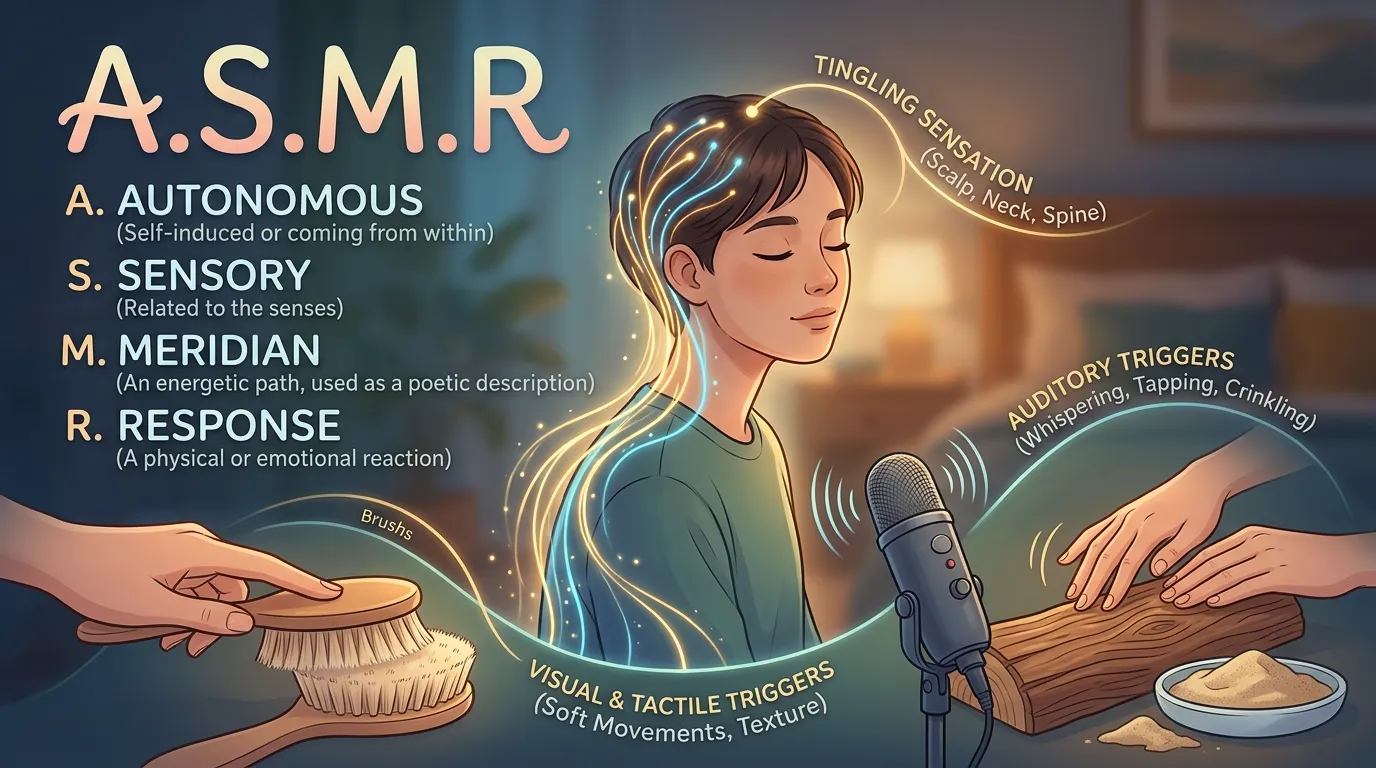
If you’ve ever scrolled through TikTok, YouTube, or a group chat and wondered what does ASMR mean in text, you’re not alone. ASMR short for Autonomous Sensory Meridian Response originally described a deeply relaxing, tingling sensation triggered by soft sounds and gentle visuals. But in today’s digital world, its meaning has grown far beyond science.
Across social media platforms and everyday texting, ASMR has transformed into a widely used slang term that captures anything calming, satisfying, or soothing in nature. Whether someone types “this song is pure ASMR” or shares a whisper video with millions of views, the word carries powerful cultural weight.
From Instagram reels to Reddit threads, understanding ASMR’s real meaning unlocks a major part of modern internet language. In this article, we break down the true meaning, real-life examples, and how ASMR is used across every major social platform today
ASMR Meaning in Text
ASMR stands for Autonomous Sensory Meridian Response. Although the full phrase sounds technical, people rarely use the complete name in everyday conversations. Instead, they simply say ASMR when talking about relaxing sounds, satisfying videos, or content that creates a calm and pleasant feeling.
In text messages, ASMR is not a slang word in the traditional sense. It is an acronym, meaning each letter represents the first letter of a longer phrase.
People commonly use ASMR when discussing videos that feature:
- Whispering
- Soft tapping
- Gentle scratching
- Page turning
- Keyboard typing
- Rain sounds
- Hair brushing
- Cooking sounds
- Soap cutting
- Satisfying object movements
For many people, these sounds create a relaxing or tingling sensation that starts around the scalp and may travel down the neck or back. Others simply enjoy the peaceful atmosphere without experiencing the tingling feeling.
What Does ASMR Mean in Everyday Chat?
In everyday texting, ASMR usually means one of three things:
1. Relaxing Content
Someone may recommend a video that helps them unwind.
Example:
“I couldn’t sleep, so I watched some ASMR.”
Here, the person is referring to calming videos or sounds that helped them relax.
2. Satisfying Sounds
People also use ASMR when describing videos with pleasant audio.
Example:
“That keyboard sound is total ASMR.”
This means the typing sounds are especially satisfying to hear.
3. A Calming Experience
Sometimes people use ASMR simply to describe something peaceful.
Example:
“Listening to the rain feels like ASMR.”
In this case, ASMR represents the relaxing feeling created by natural sounds.
Is ASMR Slang, an Acronym, or an Abbreviation?
Many people wonder whether ASMR is considered internet slang.
The answer is a little different.
- Type: Acronym
- Full Form: Autonomous Sensory Meridian Response
- Category: Internet term
- Common Use: Texting, YouTube, TikTok, Instagram, Snapchat, gaming communities
Unlike slang terms such as “LOL” or “BRB,” ASMR refers to a specific experience rather than expressing an emotion or reaction.
However, because it is so common online, many people treat it like everyday internet slang.
Where People Use ASMR
ASMR appears on many social media platforms and messaging apps. While its meaning stays the same, people use it differently depending on where they’re communicating.
ASMR on TikTok
TikTok is one of the biggest platforms for ASMR content.
Creators upload short videos featuring:
- Whispering
- Makeup sounds
- Food preparation
- Ice crushing
- Object tapping
- Satisfying cleaning videos
Users often comment:
- “This is amazing ASMR.”
- “Best ASMR ever.”
- “I can’t stop watching.”
Many TikTok users search for ASMR videos to relax after a busy day or before going to sleep.
ASMR on Snapchat
On Snapchat, ASMR is usually mentioned in private conversations or Stories.
Friends may send each other relaxing clips and write:
- “Watch this ASMR.”
- “This helps me sleep.”
- “You’ll love these sounds.”
The term is commonly used among people who enjoy calming content.
ASMR on Instagram
Instagram features thousands of ASMR creators who post Reels featuring satisfying sounds and relaxing visuals.
You might see captions like:
- “Today’s ASMR session.”
- “Relax with these satisfying sounds.”
- “Nighttime ASMR.”
Followers often save and share these videos because they find them peaceful.
ASMR on WhatsApp
On WhatsApp, ASMR usually appears in conversations between friends or family members.
Examples include:
- “Send me that ASMR video.”
- “I watch ASMR before bed.”
- “This sound is so relaxing.”
People often share YouTube or TikTok links featuring their favorite ASMR creators.
ASMR in SMS Text Messages
Although traditional SMS doesn’t include videos directly, people still use the term when recommending content.
For example:
“I found an amazing ASMR channel. I’ll send you the link later.”
Even without multimedia, the meaning remains the same: relaxing audio or visual content.
Real Chat Examples
Below are realistic texting conversations showing how people naturally use ASMR.
Example 1
A: What are you watching?
B: Just some ASMR videos.
A: Nice. They always help me relax too.
Example 2
A: Why are you wearing headphones?
B: Listening to ASMR before bed.
A: Hope you sleep well.
Example 3
A: This cooking video sounds amazing.
B: Yeah, it’s basically ASMR.
A: I could watch it all day.
Example 4
A: I’m stressed today.
B: Try watching some ASMR.
A: I’ll give it a shot.
Example 5
A: Have you seen this keyboard video?
B: Yes! Peak ASMR.
A: The typing sounds are so satisfying.
Example 6
A: Why does everyone like ASMR?
B: It helps many people relax.
A: That makes sense.
Example 7
A: What’s your favorite ASMR?
B: Rain sounds and whispers.
A: Mine is ocean waves.
Example 8
A: I couldn’t sleep last night.
B: Try an ASMR playlist.
A: Thanks for the suggestion.
Example 9
A: This page-turning video is oddly satisfying.
B: That’s exactly why people love ASMR.
A: I finally understand the hype.
Example 10
A: Why is this soap-cutting video so popular?
B: Because it’s great ASMR.
A: I never thought cutting soap could be relaxing.
How to Reply When Someone Says “ASMR”
If someone mentions ASMR in a conversation, your response depends on whether you’re familiar with it or want to keep the conversation going.
Funny Replies
- “Now I’m going to spend an hour watching ASMR videos.”
- “Great, another internet rabbit hole!”
- “Don’t blame me if I fall asleep.”
Casual Replies
- “I watch ASMR sometimes too.”
- “I’ll check it out later.”
- “That sounds relaxing.”
- “I’ve heard a lot about it.”
Friendly Replies
- “Do you have a favorite ASMR creator?”
- “Can you send me the link?”
- “I’d love some recommendations.”
- “Which videos help you relax the most?”
Neutral Replies
- “Thanks for explaining.”
- “I didn’t know what ASMR meant.”
- “Interesting, I’ll look into it.”
- “That makes sense.”
Using these replies keeps the conversation natural and shows interest without requiring you to know everything about ASMR.
Is ASMR Rude or Offensive?
No, ASMR is not rude or offensive. It is a neutral internet term used to describe relaxing sounds, calming videos, or the tingling sensation some people experience when listening to certain audio.
Most people use ASMR in a positive way. Whether they’re recommending a video, talking about a favorite creator, or sharing a relaxing experience, the term doesn’t carry a negative meaning.
Is It Safe to Use?
Yes. ASMR is generally safe to use in:
- Text messages
- Social media posts
- YouTube comments
- Online forums
- Group chats
Since it isn’t considered offensive or inappropriate, you can use it comfortably in everyday conversations.
Is It Appropriate at School or Work?
In most situations, yes.
If you’re discussing videos, hobbies, or ways to relax, mentioning ASMR is perfectly acceptable. However, like any topic, it’s best to keep the conversation relevant to the setting. For example, discussing your favorite ASMR creators during a casual break is fine, but it may not fit into a formal business meeting.
Overall, ASMR is viewed as a harmless and widely accepted internet term.
Who Uses This Term?
ASMR has become popular across many age groups, although it is especially common among younger internet users.
Gen Z
Gen Z helped make ASMR a mainstream online trend. Many young people watch ASMR videos on TikTok, YouTube Shorts, and Instagram Reels to relax, study, or fall asleep.
Millennials
Many Millennials also enjoy ASMR content, especially long-form YouTube videos featuring whispering, tapping, cooking, or nature sounds.
Teenagers
Teenagers frequently share ASMR clips with friends and often mention the term in text messages or social media comments.
Adults
Adults use ASMR for many reasons, including relaxation after work, improving focus, or creating a calming bedtime routine.
Common Platforms
You’ll regularly find ASMR on:
- TikTok
- YouTube
- Snapchat
- Discord
Its popularity continues to grow as more creators produce relaxing and satisfying content.
Origin of the Term
Unlike many internet abbreviations, ASMR wasn’t created as texting slang.
The phrase Autonomous Sensory Meridian Response was introduced around 2010 by online communities looking for a way to describe the pleasant tingling sensation triggered by certain sounds or gentle movements.
Before the name existed, many people experienced these relaxing feelings but didn’t have a common term to describe them.
As YouTube creators began making whispering, tapping, and sound-focused videos, the acronym ASMR quickly spread across the internet. Today, millions of people recognize it instantly, even if they don’t experience the sensation themselves.
Because of social media platforms like TikTok, Instagram, and YouTube, ASMR has become part of everyday online language. Many people now use it casually to describe anything they find especially calming or satisfying.
ASMR vs. Other Common Internet Terms
| Term | Meaning | Type | Usage | Popularity |
| ASMR | Autonomous Sensory Meridian Response | Acronym | Relaxing sounds, calming videos | Very High |
| IDK | I Don’t Know | Acronym | Expressing uncertainty | Very High |
| IDC | I Don’t Care | Acronym | Showing indifference | Very High |
| IMO | In My Opinion | Acronym | Sharing personal opinions | Very High |
| BRB | Be Right Back | Acronym | Temporary absence in chats | Very High |
Although all of these are internet abbreviations, they serve different purposes. ASMR refers to a relaxing experience, while the others are commonly used in everyday conversations to express thoughts or actions.
Real-World Usage Example
Imagine you’ve had a long day at work and you’re feeling mentally exhausted. While scrolling through TikTok before bed, you come across a video featuring soft rain sounds, gentle tapping, and whispered storytelling.
You send it to a friend and text:
“This ASMR video is so relaxing. It helped me unwind after work.”
Your friend replies:
“I’ve been watching ASMR before sleeping too. It really helps me relax.”
This is one of the most common ways people naturally use the term in everyday conversations.
FAQs:
What does ASMR mean in text messages?
ASMR stands for Autonomous Sensory Meridian Response. In text messages, it usually refers to relaxing sounds, satisfying videos, or calming content shared between friends.
What does ASMR mean on TikTok?
On TikTok, ASMR refers to videos featuring whispering, tapping, cooking sounds, page turning, or other relaxing audio designed to create a calming experience.
Is ASMR slang?
Not exactly. ASMR is an acronym rather than traditional slang, but because it’s widely used online, many people consider it part of modern internet language.
Is ASMR rude or offensive?
No. ASMR is a neutral and respectful term. It isn’t considered offensive and is generally appropriate for social media, texting, school, and most workplace conversations.
How should you reply to ASMR?
You can reply naturally depending on the conversation. For example:
- “I’ll check it out.”
- “Can you send me the video?”
- “That sounds relaxing.”
- “I’ve heard good things about ASMR.”
Conclusion:
Now that you know what ASMR means in text, it’s easy to understand why the term appears so often across TikTok, Snapchat, Instagram, WhatsApp, and everyday conversations. ASMR stands for Autonomous Sensory Meridian Response and is commonly used to describe relaxing sounds, satisfying videos, or calming experiences that many people enjoy online.
Whether someone is recommending a sleep video, sharing a soothing cooking clip, or talking about their favorite content creator, ASMR has become a familiar part of internet culture. It’s a friendly, non-offensive term that can be used in casual conversations without concern.
If you ever receive a message mentioning ASMR, you’ll know exactly what it means and how to respond confidently. As online language continues to evolve, understanding popular internet terms like ASMR makes it easier to stay connected and enjoy conversations across social media and messaging apps.

Michael Anderson is a Bible researcher and Christian writer who simplifies Scripture for everyday readers. At meanspaces.com he shares clear and meaningful insights into Bible verses and their spiritual significance.